
Guest Speaker: Professor Neville Stanton

7th August, White Hart Hotel, Salisbury.
Professor Neville Stanton described his career in ergonomics and human factors—the study of how people interact with technology and complex systems. After beginning as a Sainsbury’s management trainee, he moved into psychology and engineering at the University of Southampton. His varied career included work following the Ladbroke Grove rail disaster, the design of military and submarine control rooms, Apache helicopter mission-planning systems, aviation operations and autonomous vehicles with Jaguar Land Rover.
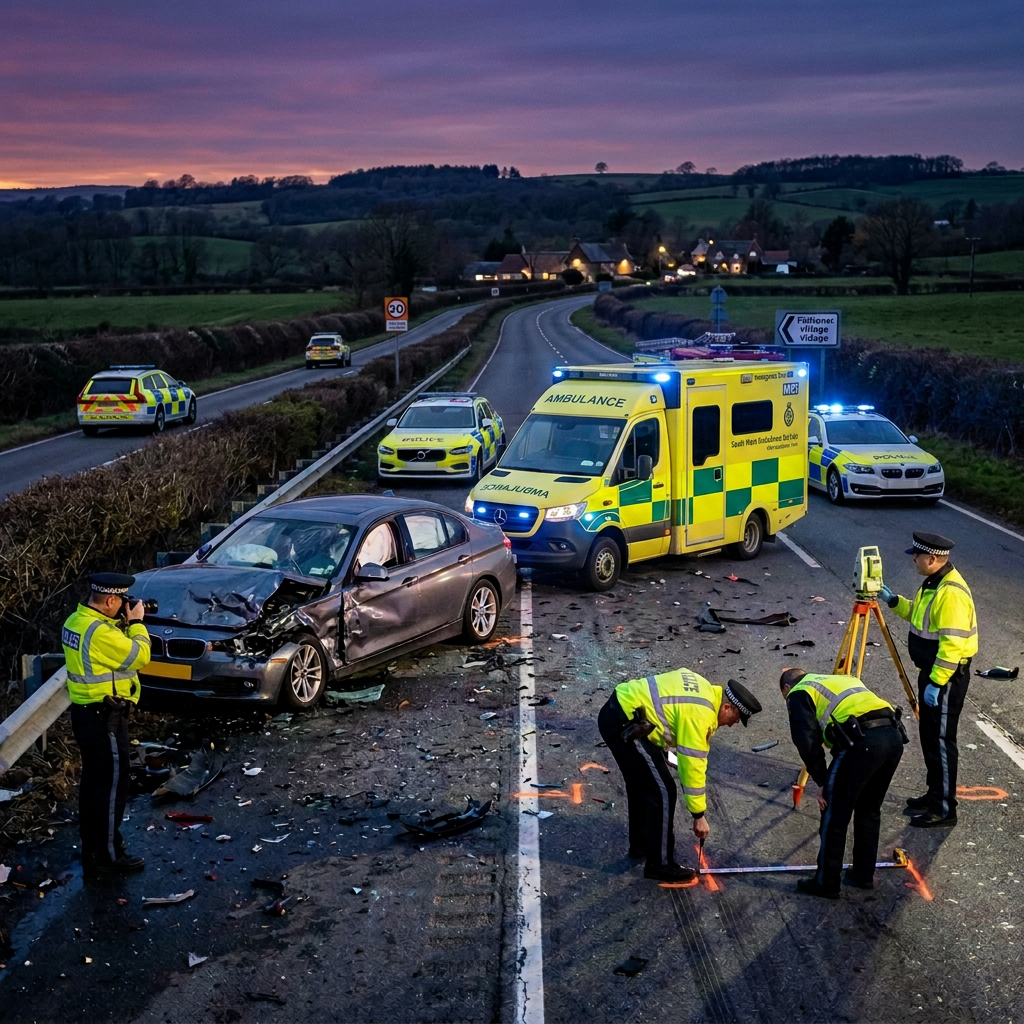
The main subject of his talk was the Department for Transport’s Road Collision Investigation Project, conducted between 2018 and 2022 and managed by the RAC Foundation. Professor Stanton argued that road deaths should be investigated in the same systematic, independent and “no-blame” manner as air, rail and maritime accidents. Police investigations are essential but tend to concentrate on legal culpability and the immediate actions of those involved. This can obscure the deeper conditions that allowed a collision to occur.
Using an “iceberg” analogy, he explained that driver behaviour, vehicles and road conditions form only the visible tip. Beneath them lie less obvious influences such as vehicle design, company decisions, training, road planning, regulation, government policy and safety standards. He advocated the use of the AcciMap method to trace failures and protective factors through every level of this wider socio-technical system.
The fatal 2018 collision involving an experimental Uber self-driving vehicle in Arizona illustrated this approach. Although its safety operator had been distracted, numerous other factors contributed: Uber had reduced the crew from two people to one; the Volvo emergency-braking system had been disabled because it interfered with Uber’s equipment; the automated system struggled to classify the pedestrian; the road layout encouraged people to cross at an unsuitable place; and Arizona had permitted testing after California rejected Uber’s safety case. Professor Stanton’s point was that blaming only the operator would leave most of the underlying hazards untouched.
He trained the collision investigators who applied the method to 37 fatal road collisions. The subsequent meta-analysis showed that conventional investigations could miss approximately 60 per cent of the contributory factors, particularly those involving standards, legislation, regulation, public information and organisational decisions. Legislation and regulation appeared to exert the greatest influence across the entire road-safety system.
Motorcycle safety provided a personal example. As a motorcyclist himself, Professor Stanton questioned the absence of a motorcycle equivalent to the Euro NCAP car-safety programme and discussed better protective-clothing standards, clearer consumer information, safer road design and possible financial incentives for purchasing protective equipment.
He concluded by supporting the establishment of a national Road Safety Investigation Branch. Such a body was announced in 2022 but cancelled in January 2024. Professor Stanton said that the proposal had since reappeared within the Government’s 2026 road-safety strategy, giving him renewed hope that independent, system-wide investigations might eventually reduce the continuing toll of deaths and serious injuries on Britain’s roads.
Links to the two collision investigation reports by Professor Stanton:
https://www.racfoundation.org/research/safety/models-and-methods-for-collision-analysis
Professor Stanton took questions, and Steve Mayall proposed the vote of thanks.
Members then assembled for an informal lunch at a nearby hostelry, and put the worlds to right as usual.
Another excellent meeting.
Discover more from Probus Club of Salisbury
Subscribe to get the latest posts sent to your email.

