
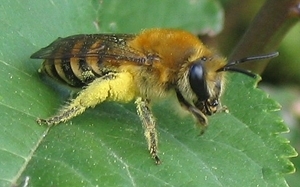
“A Buzz in the Garden” – A talk by Richard Rickett, March 20th 2026
🌼 An Engaging and Eye-Opening Talk
At our recent Probus Club meeting, we were treated to a thoroughly engaging and informative talk by Richard Rickett, entitled “A Buzz in the Garden.”
Building on a previous presentation about honeybees, Richard expanded the subject to explore the extraordinary diversity of bee species, their behaviour, and the growing challenges they face in today’s environment.
The talk was not only informative but delivered with warmth, humour, and a clear passion for the subject.
🐝 More Than Just Honeybees

One of the first surprises was just how many types of bees there are. While honeybees tend to dominate public awareness, they represent only a small part of the picture.
- Around 20,000 species exist worldwide
- Approximately 300 species are found in the UK
These fall into three broad groups:
- Bumblebees – familiar, social insects seen in many gardens
- Solitary bees – the largest and most varied group
- Honeybees – the managed species kept by beekeepers
Particularly striking was the discussion of declining species, including the rare shrill carder bee, now confined to just a handful of locations.
🌱 The Life of a Bumblebee
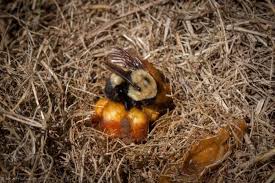
Richard gave a fascinating insight into the lifecycle of the bumblebee.
- Only the queen survives the winter, hibernating alone
- In spring, she emerges, feeds, and searches for a nesting site
- She raises the first brood unaided
- The colony expands through the summer
- By autumn, the colony dies, leaving only new queens
One memorable comparison was the energy required for flight—a bumblebee, relative to its size, expends energy comparable to several Olympic rowers.
🏡 Solitary Bees – The Quiet Majority

Many members were surprised to learn that most bees are solitary rather than social.
Each female:
- Builds her own nest
- Provides food for her young
- Seals each chamber independently
Their behaviour is remarkably ingenious:
- Some species waterproof nests with natural secretions
- Leafcutter bees construct nests from precisely cut leaves
- Others use mud or even reinforced snail shells, complete with a protective covering
It was a reminder of just how complex and resourceful these small creatures are.
⚠️ A Decline We Can No Longer Ignore

The talk also highlighted the worrying decline in insect populations.
- A 78% reduction in insects across Europe in just 24 years
- Loss of 97% of wildflower meadows since the Second World War
- Increased use of pesticides and habitat destruction
Many of us will recognise the signs—fewer insects on windscreens and a noticeable quietness in the countryside.
Perhaps most striking was the suggestion that towns and gardens are now often better habitats for bees than rural farmland.
🌸 Why Bees Matter

Bees are essential to our everyday lives:
- Around one-third of our food depends directly on pollination
- A further third depends on it indirectly
- Pollinated crops are more productive and more nutritious
Without bees, many familiar foods—including fruit, vegetables, coffee, and chocolate—would become scarce.
🌿 What Can We Do in Our Gardens?


A key message from the talk was that gardeners can make a real difference.
Practical steps include:
- Planting nectar- and pollen-rich flowers across the seasons
- Choosing simple, open blooms rather than heavily bred varieties
- Allowing parts of lawns to grow naturally
- Providing nesting areas such as bare soil or bee hotels
- Reducing or avoiding pesticide use
Richard shared his own experience of increasing bee species in his garden from around a dozen to over sixty, simply through thoughtful planting.
🐝 A Small but Meaningful Gesture
A particularly memorable tip was how to help an exhausted bee in early spring.
A simple solution of sugar and water, combined with a little warmth, can revive a struggling queen—potentially saving an entire future colony.
🌟 Final Thoughts
Richard Rickett’s talk was both informative and thought-provoking, combining scientific insight with practical advice and a clear enthusiasm for the natural world.
The central message was encouraging: Even small changes in our gardens can have significant and lasting effects.
It is one of the few environmental challenges where individual action can genuinely make a visible difference.
Discover more from Probus Club of Salisbury
Subscribe to get the latest posts sent to your email.
 Probus Club of Salisbury