
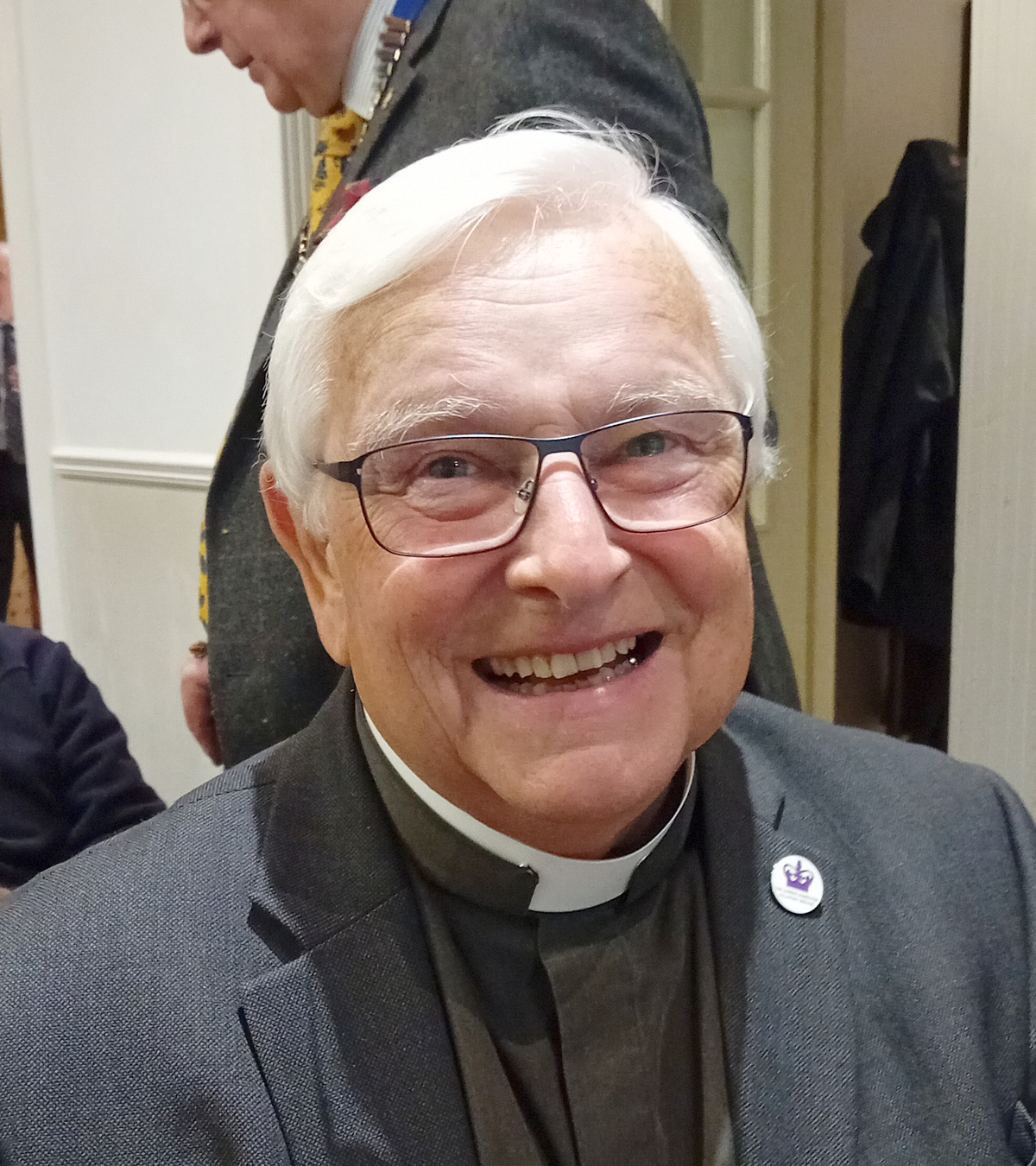
Paul Mellor – 20th October 2023
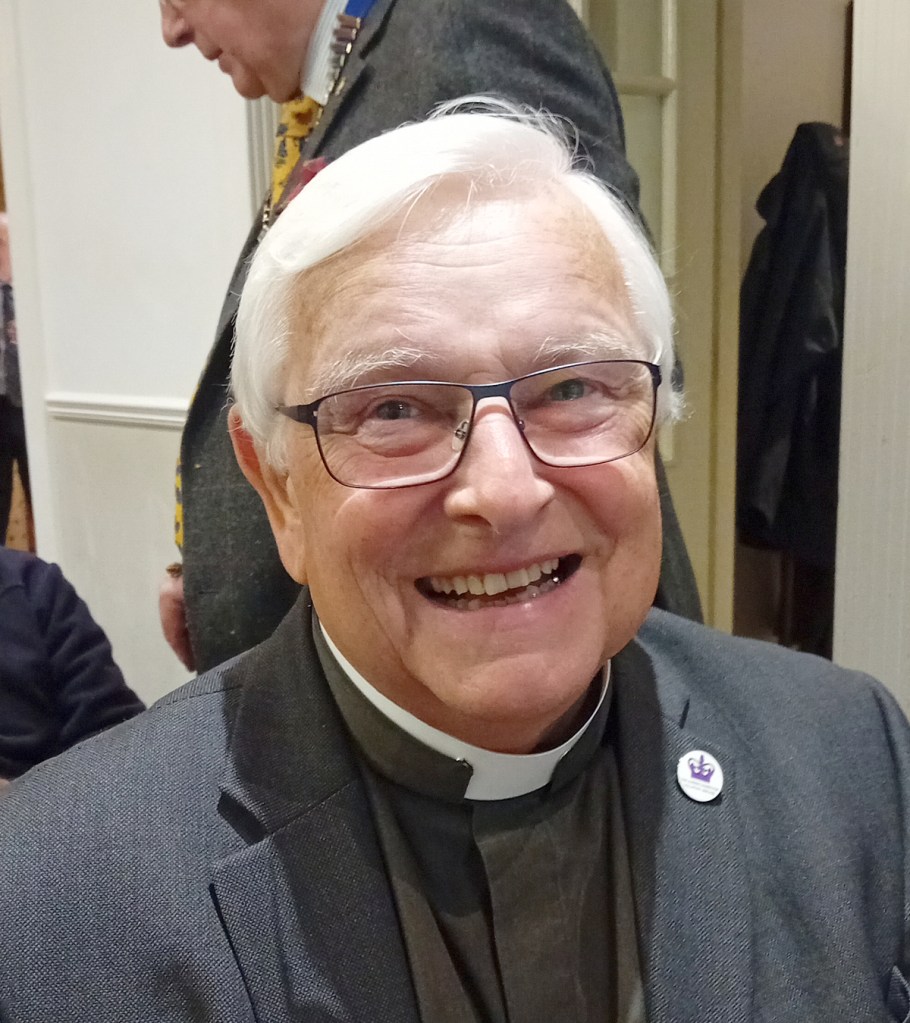
Paul was born in 1949 and brought up in Worksop near Macclesfield. A mining community, Pual has fond memories of playing in Sherwood Forest. His father, a cabinet maker, later joined the NCB and worked in the mining industry.
Paul attended the local parish church in Worksop, and was a chorister and server. Although baptised Kenneth Paul, he was always known as Pual. His maternal Grandmother was a devout lady who supervised his church visits, and Paul explained that this was the start of his vocation in the church.
In 1971, he went to Southampton University to study Theology. He toyed with the idea of being a Jesuit missionary, but he met Lyndsey (his future wife) and thought better of the idea. Instead, he spent time at the Hostel of the Resurrection in Mirfield, where Silvanus Berry (later superior at the community) was a considerable influence.
During this time, Paul was a telephone Samaritan. He later obtained his MA in Theology, and was ordained at York Minster.
He has worked as a domestic in a mental hospital, and been a hospital chaplain at Castle Hill hospital. 1976 saw him working in Crowthorne, Berkshire, and Ascot Heath, collecting donations from racegoers with vigor!
The next stop was the small village of Menheniot, near Liskeard in Cornwall, which Paul describes as a beautiful, friendly place. By 1984, paul had moved to Truro, (St. Valentines Church?) where he was persuaded to abseil down from the church tower to raise money for roof repairs. After a while as Canon Treasurer at Truro Cathedral, Pauls’ next adventure was in the Channel Islands, where he spent 12 years ministering on Gurnsey, Sark and Alderney.
When doing his A levels, he saw Dame Judi Dench at Nottingham Playhouse, and became a lifelong fan of the actor. When Paul was producing a son-et-Lumiere in later life, he wrote to Dame Judi to see if she would narrate the commentary. She agreed, and Paul was extremely excited to finally meet his heartthrob. He arranged to meet her at the Church House studios in Westminster. On greeting her from her taxi, he offered to pay the fare, but Dame Judi, seeing his clerical clothes suggested she paid as he was on a reduced income!
Paul eventually settled in Salisbury where he was Master of St. Nicholas Hospital before retiring.
He has been married for 51 years, and has three sons. Pauls’ presentation was full of anecdotes, happy memories and interesting photographs. It was well received by the members.
John Broadley – 17th November 2023
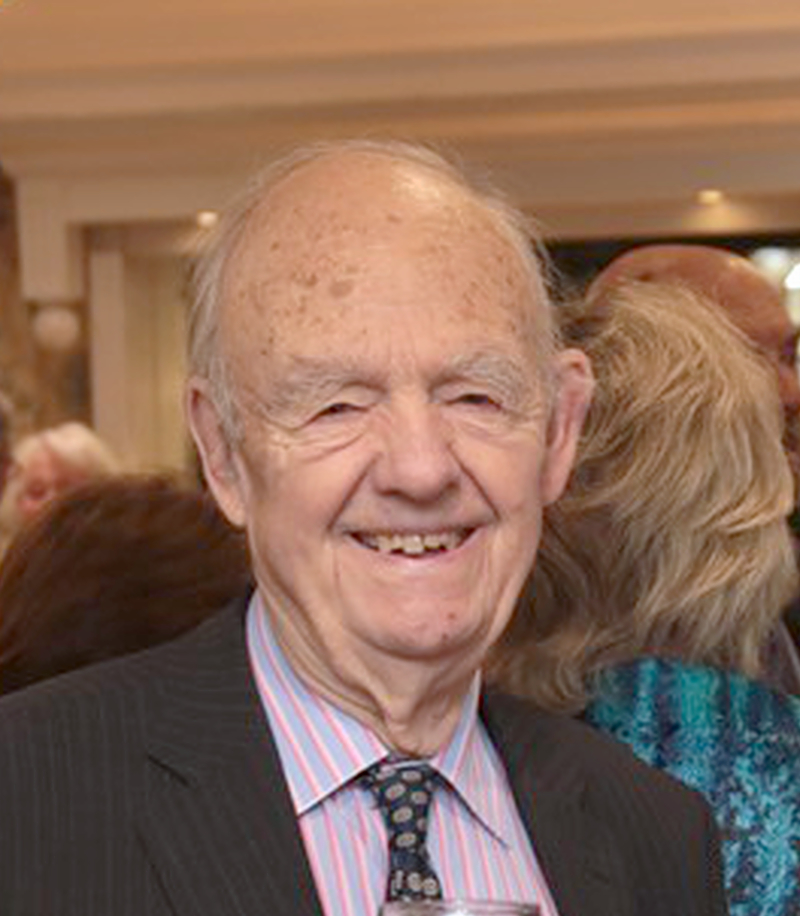
Johns’ talk began with some extracts from the Foreign Office guidance given to diplomats in 1965, most notably not to take advantage of diplomatic immunity when parking!
John has had a long career in the diplomatic service. He was brought up in Norfolk during WW2. His family moved to Oxford for a while before returning to Norfolk till John was fourteen when his father passed away.
Two years of National Service saw John in the Royal Horse Artillery (no longer horse dependent) taking part in exercises in Northern Germany.
After National Service, John studied at university for four years reading classics and philosophy. After graduating, he decided to try for the Foreign Office, with it’s tough three stage examination, in which he was successful.
His first job was in the Africa department, involved with policy and monitoring of Angola and Mozambique. After two years John got his first overseas posting, to the British Embassy in Washington. In 1963/64 he was present at the signing of nuclear proliferation reduction agreements between the USA and the USSR. By now, John was married.
Three years later, he was moved to La Paz in Bolivia, where we was promoting British exports and generally flying the flag. This lasted a further three years before a move back to London. In 1973 John was in Geneva involved with the UN Trade and Development agency and OECD.
Further work involved time in Jordan (‘King Hussain – a real statesman’), and worked during the Thatcher government, including involvement with security matters at the height of the IRA troubles.
Gibraltar was John’s next port of call, where he spent four years. During this time he was involved with the border discussions with Spain, a situation that took twelve months to resolve. Access to the Airport from Spain is still in dispute.
John’s most memorable posting was during 1989-1991 when he was Ambassador to the Holy See at the Vatican. For those not familiar with the Holy See, Wikipedia provides the following:
The Holy See has long been recognised as a subject of international law and as an active participant in international relations. One observer has stated that its interaction with the world has, in the period since World War II, been at its highest level ever. It is distinct from the city-state of the Vatican City, over which the Holy See has “full ownership, exclusive dominion, and sovereign authority and jurisdiction”.
The diplomatic activities of the Holy See are directed by the Secretariat of State (headed by the Cardinal Secretary of State), through the Section for Relations with States.
Whilst not a member of the United Nations in its own right, the Holy See recognizes all UN member states, except for the People’s Republic of China (as the Holy See only recognizes the Republic of China) and North Korea (as the Holy See only has relations with South Korea). The Holy See also recognizes the State of Palestine, the only other non-UN member it recognizes besides Taiwan (ROC).
The term “Vatican Diplomatic Corps”, by contrast with the diplomatic service of the Holy See, properly refers to all those diplomats accredited to the Holy See, not those who represent its interests to other nations and international bodies. Since 1961, Vatican diplomats also enjoy diplomatic immunity.
John was there during the fall of the Belin wall and the end of the USSR. He was also there during the Iraq war of 1991, a conflict he described as a ‘total disaster’ due to a lack of understanding of the tribal nature of the people and the effect this had on government and security.
John retired formally in 1995. He later trained as a licensed lay minister. He subsequently spent fifteen years doing charity work connected with the rehabilitation of prisoners, working at, among other places, the Vern Prison on Portland. This work was to help establish a sense of responsibility with offenders, and hence encourage change to turn their lives around.
Since February 2012, John has been chair of trustees for the charity ZANE, Zimbabwe a National Emergency. The charity is described thus: The provision of food, medicine and support to pensioners, including WW2 and other Commonwealth veterans and their widows. ZANE works in partnership with RCEL. – Small scale community education, training and farming projects in impoverished communities. – Health programmes: clubfoot correction, hearing aids, prosthetic limbs for mine victims.
What John didn’t mention was that in 1988 he was made a companion of the Most Distinguished Order of Saint Michael and Saint George (CMG) for his service to the diplomatic corps. Accordingly, he has a mention in ‘Who’s Who’.
A wide and varied career in the front line of diplomacy – much appreciated and enjoyed by fellow members.
James Prain – 17th November 2023
(Photo to appear in due course)
James introduced his thumbnail as Genealogy and Geography, these being the two passions that have shaped his life.
Spurred on by research done by his grandfather and great uncle, James has traced his family tree to the point where he has identified, and has photographs, of all eight of his great-great-grandparents. He has even managed to uncover twenty one of his thirty two three times grand parents. On this journey he uncovered some interesting facts about some of his ancestors.
- Brigadier Alexander Prain (Director of Survey, 21st Army Group [North-western Europe]) was responsible for ensuring that all the appropriate maps for the D-Day landings were in the correct hands at the appropriate time. In his younger days as a Captain, Prain had been Assistant Director of Survey British Troops in Egypt, and Deputy Director of Survey, Middle East, surveying the borders of Iran and Iraq.
- Sir David Prain CMG CIE FRS FRSE (11 July 1857 – 16 March 1944) was a Scottish botanist who worked in India at the Calcutta Botanical Garden and went on to become Director of the Royal Botanic Gardens, Kew. More details here.
- Isaac William Purchase was a Mayor of Romsey
- Sir William Bentley Purchase CBE MC (31 December 1890 – 27 September 1961) was a British physician and barrister. He pursued a career in medical examination and served, from 1930 to 1958, as the coroner with jurisdiction over much of London. He is best known for his role in the development of Operation Mincemeat, a deception operation during the Second World War. As coroner, Purchase provided a corpse in 1943 for use in Operation Mincemeat. The World War II special operation centred on the release in Spanish territorial waters of a body dressed in the uniform of a British marine officer-courier. The body was supposed to be carrying top-secret planning documents in preparation for Anglo-American operations in the Mediterranean Sea. As a counter-intelligence initiative, the operation pointed German military intelligence, the Abwehr, toward locations far away from the Allies’ true target of Sicily. The German armed forces did not take steps to establish tactical air command over Sicily at the time of the Allies’ amphibious assault, and Operation Mincemeat is said to have saved thousands of lives.
James enjoyed Geography, Physics and Maths at school, ultimately leading to a career as a professional land surveyor, a specialist in Geospatial Intelligence or GEOINT.
Clearly influenced by his ancestors, he sent off an application for details about army careers, using a coupon in the Radio Times magazine. When the recruiting sergeant knocked on the door to find that Mr James Prain was only eight years old, he suggested he re-apply in ten years time. Eventually, James attended the Army 6th form collage at Welbeck, Founded in 1953; 71 years ago, the school was originally based at Welbeck Abbey near Worksop, where it provided A-level education for boys planning to join the technical branches of the British Army. After this he did indeed join the army, went to Sandhurst , and was posted to Northern Germany. Here he learned how to drive tracked vehicles and has the coveted Group ‘H’ on his driving license.
In 1979 he was posted to Salisbury Rhodesia as part of a ceasefire monitoring force, assisting with peaceful free and fair elections. At the end of this exercise James switched from combat engineer to land surveyor and went to the Royal School of Military Survey. The Royal School of Military Survey (DCI RSMS) is a joint services survey training facility associated with the Corps of Royal Engineers (RE) but attached to the United Kingdom Defence Intelligence and Security Centre (DISC), located at Denison Barracks, Hermitage, Berkshire. Further details of the school may be found here. James was Chief Instructor.
James entertained us with stories about the introduction of early GPS systems, and the militaries reliance on maps. One of his claims to fame is a Sun Compass complete with improvements that he designed, now on display in the Science Museum in London.
After retiring from the army, James worked in Frome for a geospatial company developing foliage penetrating radar, before taking a role as a Civil Service Scientist with DSTL at Porton Down. James’ online bio states:
James Prain is a senior expert working at the UK’s leading defence research agency on geospatial capability development. He works closely with the GEOCORE consortium of leading academic and industry partners, led by Envitia, which was awarded a contract by DSTL to deliver applied research to the UK MoD for the rapid development and insertion of geospatial technology. James Prain is also very much involved in the Advanced Geospatial Information and Intelligence Services (AGIS) programme.
Although partially retired, James is the Principal at Defence Science and Technology Lab(DSTL).
One final anecdote was the fact that James was at university with Carol Vorderman, and he revealed that she did indeed wear thigh length leather boots to lectures.
Another excellent, informative and humorous presentation, appreciated by all members in attendance.
Discover more from Probus Club of Salisbury
Subscribe to get the latest posts sent to your email.
 Probus Club of Salisbury