
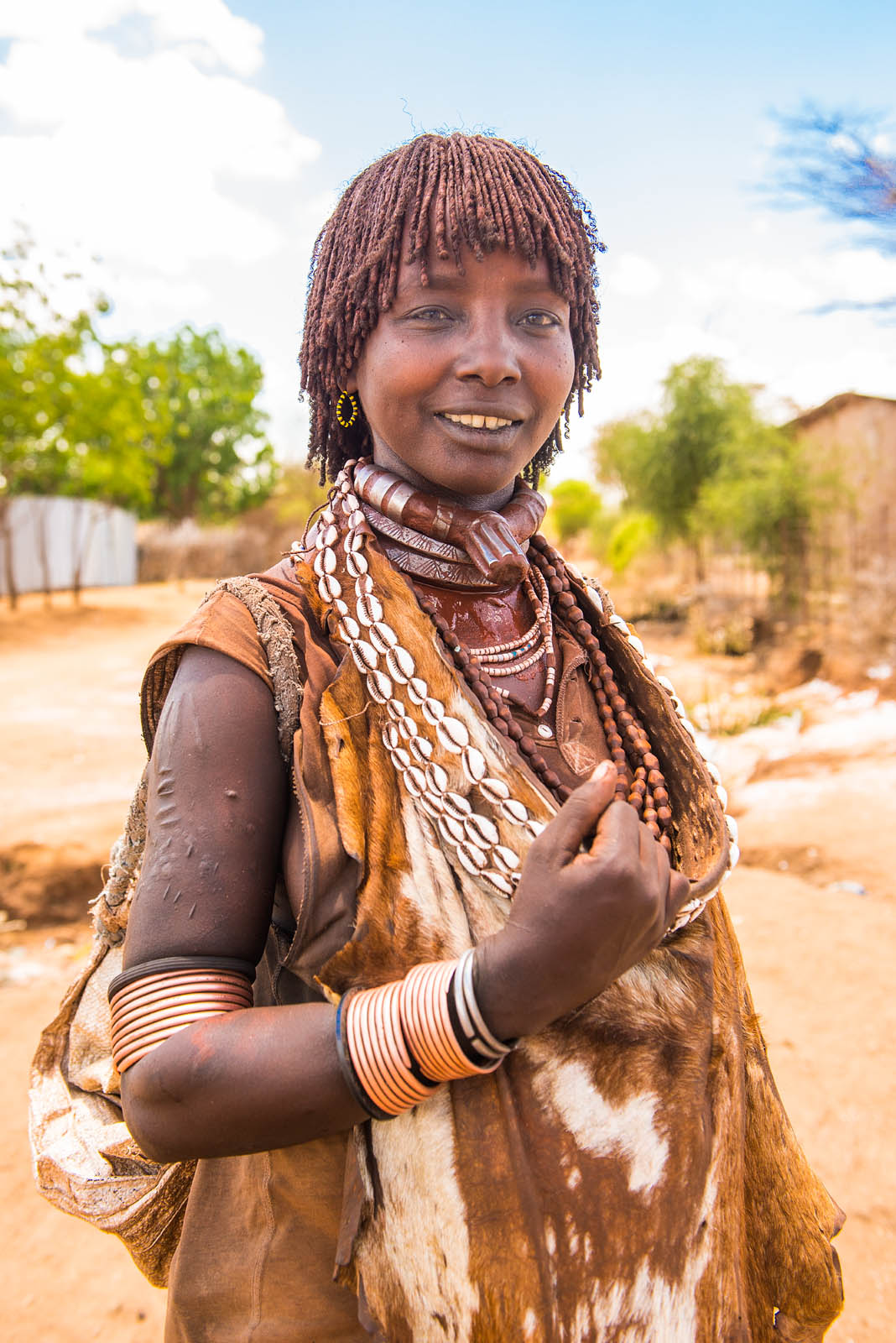
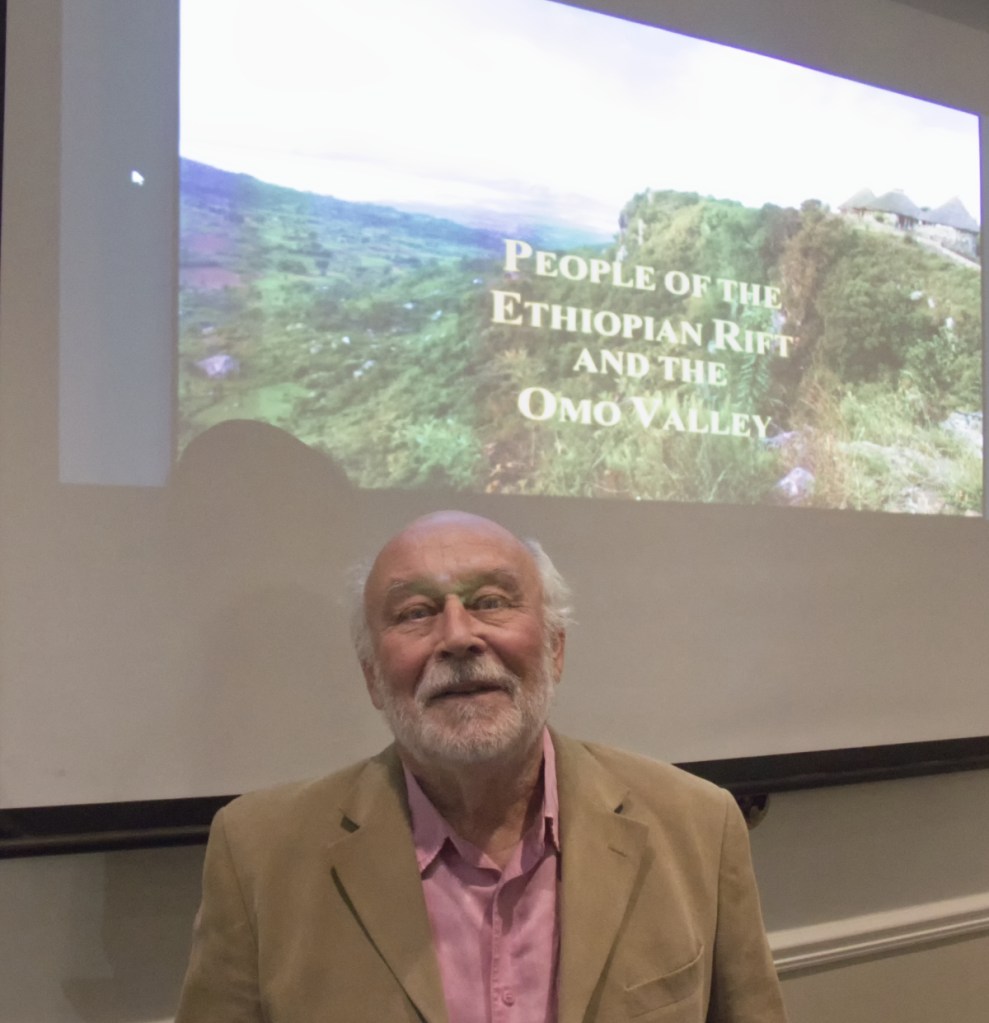
Tim Rubidge, 15th September 2023
Thirty-two members sat down to listen to Tim Rubidge give a very interesting and at times’ thought-provoking presentation about his travels in Southern Ethiopia. Tim, who was a microbiologist, is a solo traveller who enjoys the challenge of managing his own expeditions and visits to arid, different, and somewhat difficult to get to parts of Africa. Tim illustrated his talk with a number of fine colour photographs, giving a detailed insight into the people and customs of this country.
Africa is a huge country – Tim explained that most map projections do not really show the vastness of the continent and explained that most of the remaining landmasses of the world would fit into the area covered by Africa. Ethiopia itself has a population of 110 million and more than 290 language dialects, so it’s a country of vast size and diversity.
It’s also often referred to as the cradle of humanity, as some of the oldest fossils of man’s closest ancestors have been found in the area. The most well-known hominid discovery is Australopithecus afarensis (Lucy). Known locally as Dinkinesh, the specimen was found in the Awash Valley of Afar Region in 1974 by and is one of the most complete and best-preserved adult Australopithecine fossils ever uncovered. Lucy’s taxonomic name refers to the region where the discovery was made. This hominid is estimated to have lived 3.2 million years ago.
Tim chose to explore Southern Ethiopia as this is a less developed region, far away from the capital Addis Ababa and the trappings of modern society.
Tim’s journey took in a number of different cultures. He explained how the Dorza people grow the False Banana tree (it’s not a tree, and the fruit isn’t edible!), and use the pulp from the leaf stems and corm to make a kind of flat-bread. It’s also used for making an ‘beer’, which resembles ‘sloppy porridge’ and has a unique taste, according to Tim.
Another ethnic group is the Mursi. The Mursi undergo various rites of passage, educational or disciplinary processes. Lip plates are a well-known aspect of the Mursi and Surma, who are probably the last groups in Africa amongst whom it is still the norm for women to wear large pottery, wooden discs, or ‘plates’, in their lower lips. Girls’ lips are pierced at the age of 15 or 16. It is considered a sign of great beauty.
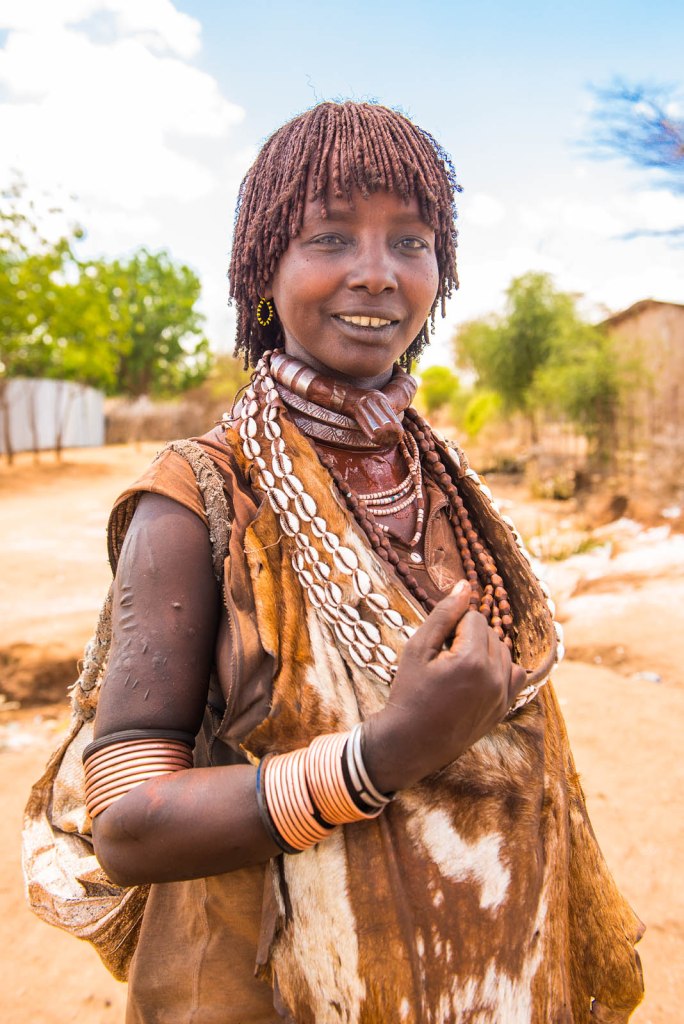
Yet another group are the Hamar. The Hamar are known for their unique custom of “bull jumping,” which initiates a boy into manhood. First, female relatives dance and invite whipping from men who have recently been initiated; this shows their support of the initiate, and their scars give them a say on who they marry. The boy must run back and forth twice across the backs of a row of bulls or castrated steers and is ridiculed if he fails.
In all these communities, family is very important and extended multi-generational families live together and support each other.
This most interesting presentation generated a number if questions from the membership, and Tim was pleased to add further details as necessary. The vote of thanks was duly given and appreciation shown in the customary way. A number of photographs from Tim’s travels in Ethiopia and other countries may be found here: https://www.timrubidge.com/gallery_715961.html
After a short interlude in the bar, two dozen or so members enjoyed a themed lunch, this month celebrating and remembering the pilots of the Battle of Brittain, their victory and sacrifice. Steve Simms proposed the toast to the Royal Air Force, followed by toasts to the King, and the Club.
Another very enjoyable meeting where members were able to enjoy the social atmosphere, good food and a very enjoyable talk by a first class speaker.
Discover more from Probus Club of Salisbury
Subscribe to get the latest posts sent to your email.
 Probus Club of Salisbury