
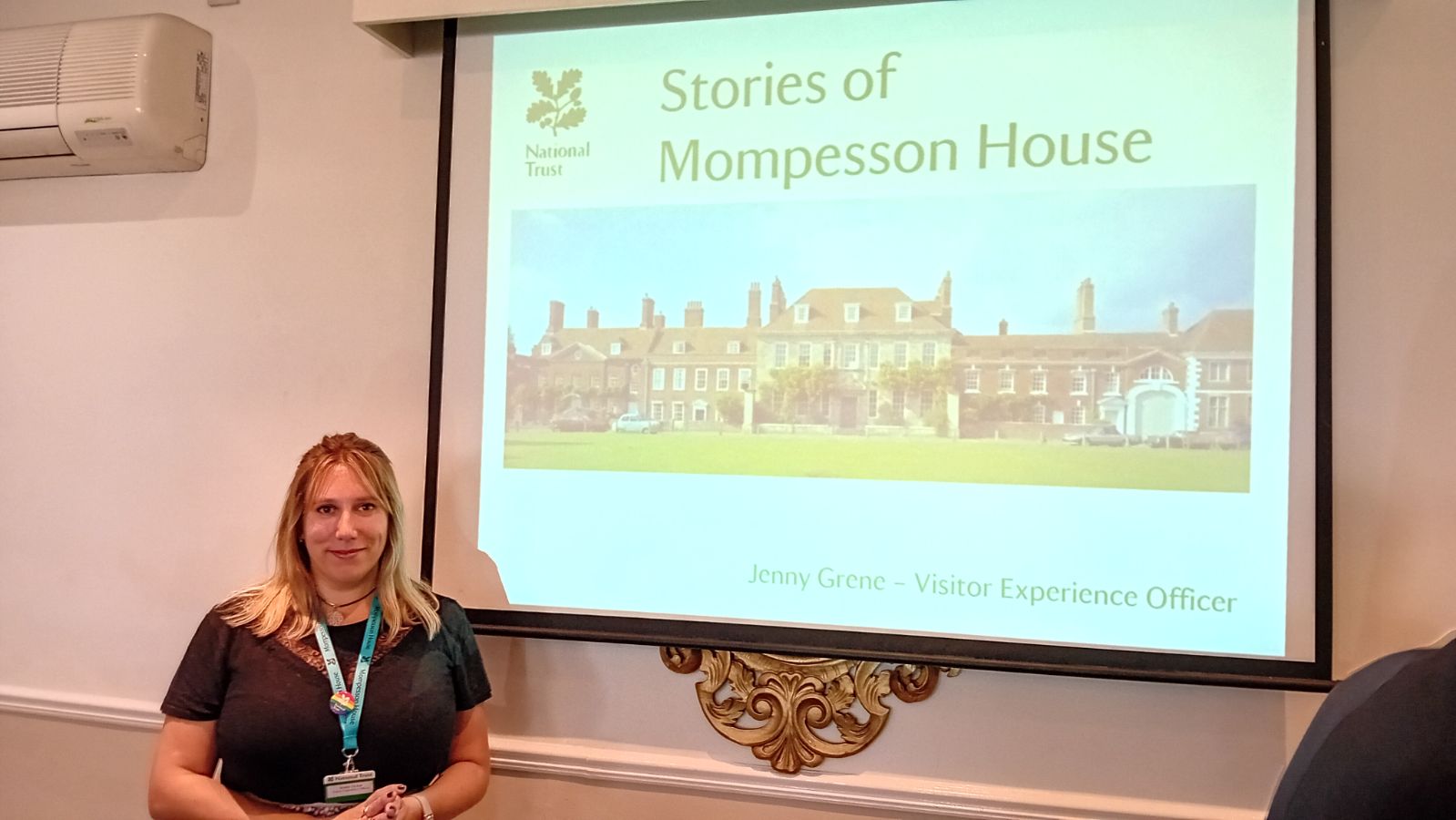
Jenny Grene, The National Trust
1st September 2023.
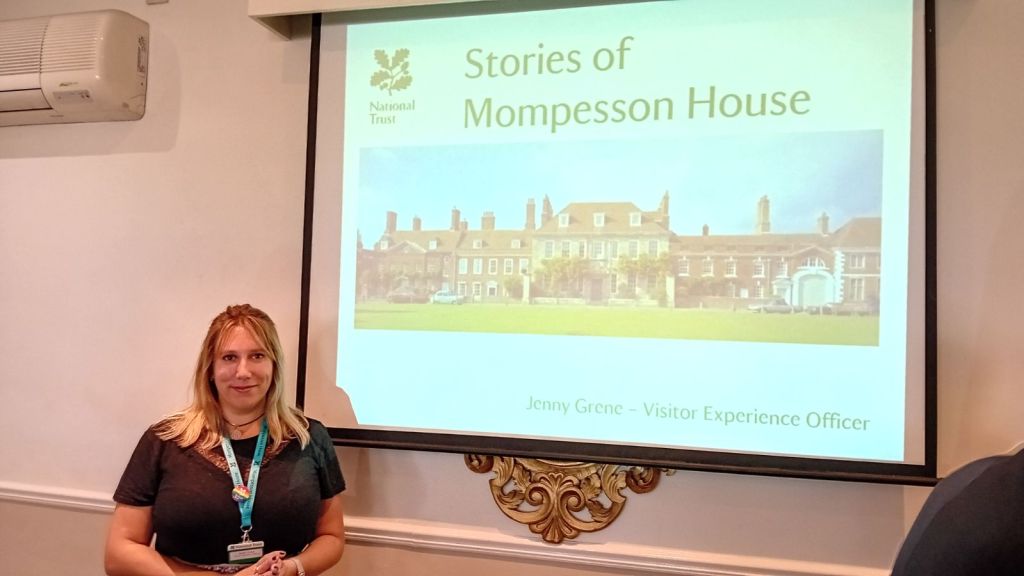
Thirty-five members assembled on the 1st of September to listen to Jenny Grene from the National Trust, relate the history and background of Mompesson House, a property of the National Trust which can be found in the Cathedral Close. Jenny is the Visitor Experience Officer for Mompesson and her role is that of coordinating any event or activity that engages with the public and relates to Mompesson.
In a very informative forty-five minutes or so, Jenny, who has two degrees in History, explained about the various owners and residents who have lived in the house since it was built in 1635 by Thomas Mompesson. In 1701 it was inherited by his son Charles. In 1703 Charles commemorated his marriage to Elizabeth Longueville by adding a cartouche over the front door displaying their joined coats of arms. After Charles’ death in 1714, Elizabeth’s brother Charles Longueville moved into the house with his widowed sister. Charles added the plasterwork, staircase, and the brick wing in 1740. From them the house passed via Charles’ natural son, John Clark, to Mrs Hayter.
During the Regency Period the house was occupied by the three Portman sisters, Ann, Wyndham and Henrietta, the daughters of Henry Portman, the last of whom died at a great age in 1846. The Townsend family occupied the house from 1846 to 1939, and the flamboyant artist Miss Barbara Townsend, mentioned in Edith Olivier’s book Four Victorian Ladies of Wiltshire, lived there for the whole of her 96 years. The Bishop of Salisbury, Neville Lovett, lived there from 1942 to 1946.
Mompesson House was used as a location for the 1995 film adaptation of Sense and Sensibility.
In 1952 the freehold was purchased from the Church Commissioners by the architect, Denis Martineau, who bequeathed it to the National Trust on his death in 1975, a condition of the sale. Martineau completed extensive repairs and renovation throughout the property and opened the home to visitors two afternoons each week.
Denis Marineau oversaw many improvements to the property during his tenancy, including a complete rewiring in 1975. Sadly, Denis died in 1976. The National Trust, having taken ownership now, managed to get the house into a position where it could be opened to the public, and on 1st May 1977 that is what happened.
Jenny explained that nearly all the furniture and artefacts in the house do not belong to the NT – many are on loan from prominent museums and collections such as the V&A, The Bristol and Salisbury Museums and reflect the Regency Style of the house’s halcyon days.
Among these are the Turnbull Collection of English 18th-century drinking glasses bequeathed to the Trust in 1970 by Mr. O.G.N. Turnbull. Some 370 pieces are in the collection of fine Jacobite Glasses. An interesting fact that Jenny passed on was the fact that the air twist stems of these glasses were considered as a way of reducing the ‘glass tax’ and hence the cost of the items.
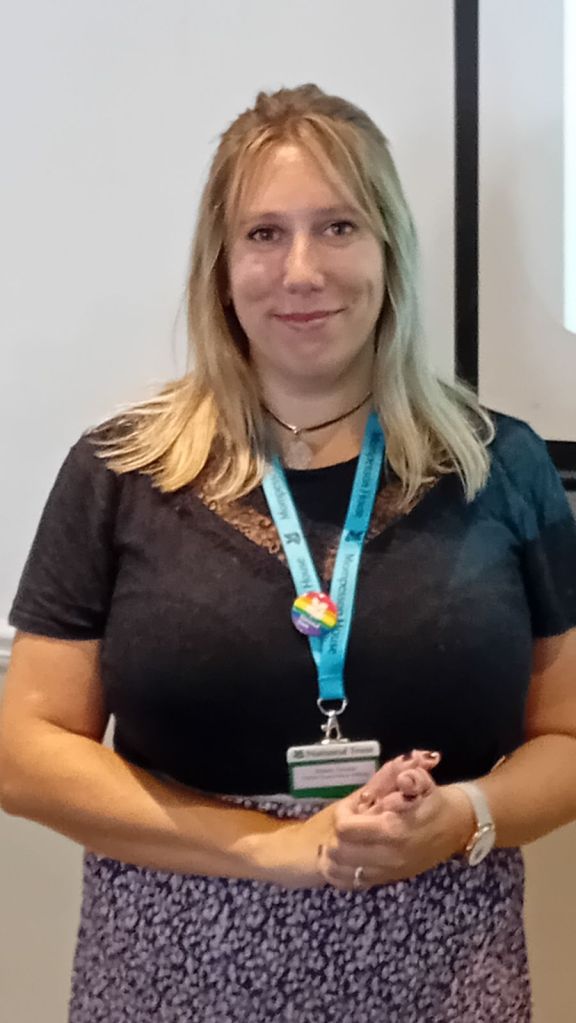
A very interesting and informative presentation that was enjoyed by all, whether you were familiar with Mompesson house or not.
James Prain gave the vote of thanks and led a well-deserved round of applause.
Afterwards, fourteen members adjourned to the Wig and Quill public house for an informal lunch general chinwag.
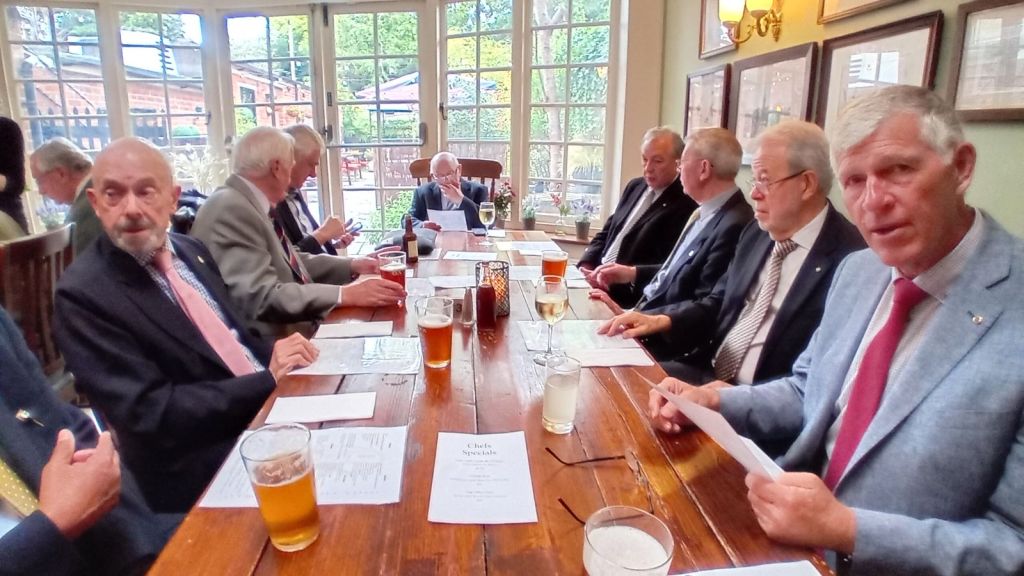
The next speaker on the 15th September is Tim Rubidge with ‘My Travels in Ethiopia’
Discover more from Probus Club of Salisbury
Subscribe to get the latest posts sent to your email.
 Probus Club of Salisbury