
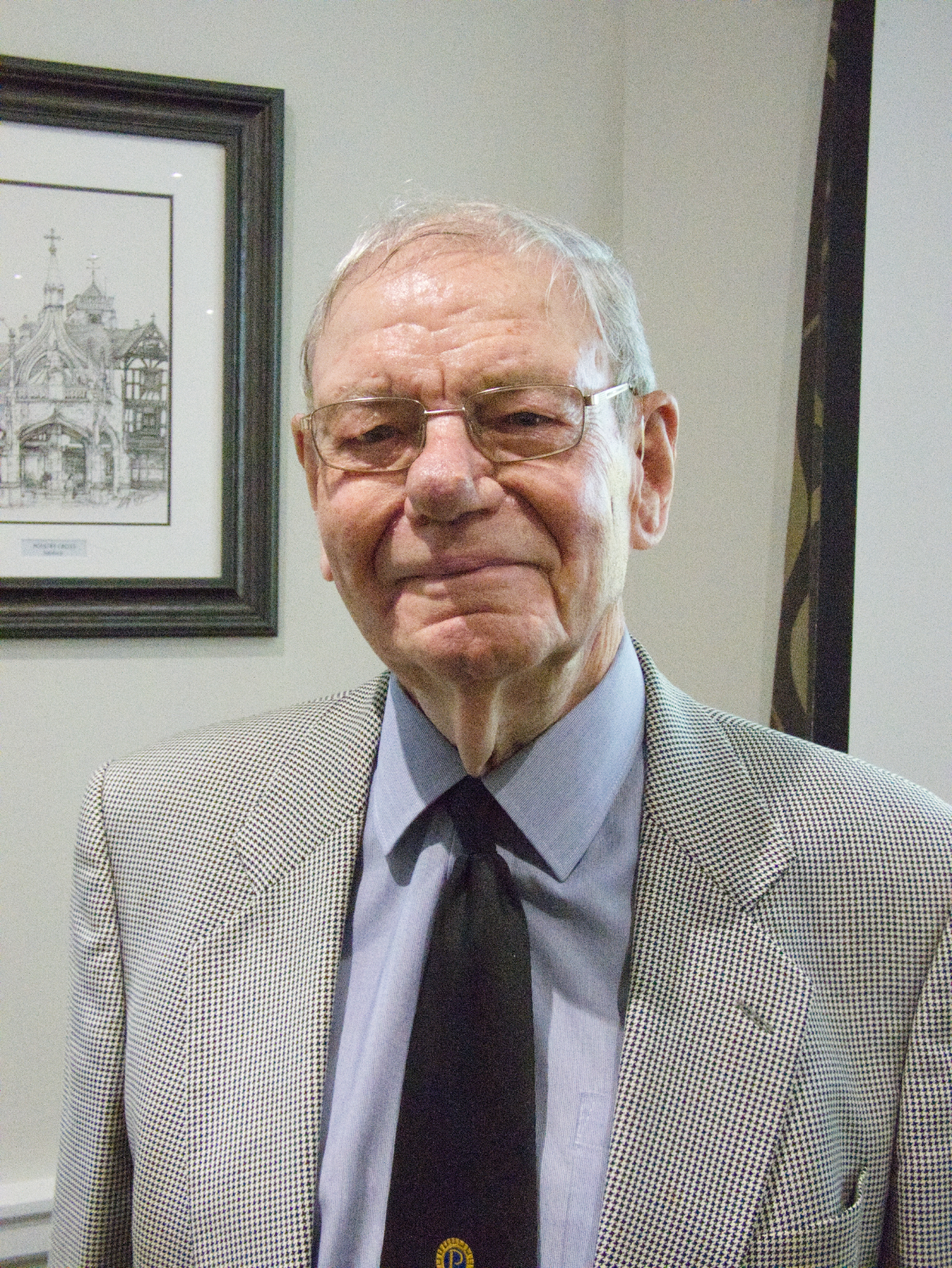

Probus members welcomed Alan Oliver to their meeting on the 18th of August for a very informative presentation about pollution and its many forms, but concentrating on aerial, farming and plastic waste. Allan described the various properties of common plastics pollutants, such Polyethylene (polythene), Polypropylene (PVC) and Polystyrene (often used in injection moulding). All are very resistant to biological breakdown. Packing and building activities amount for 60% of plastic use. 90% of these are not recyclable, taking 450 years to decompose naturally. 8 million tons of plastic end up in the worlds oceans, and as micro plastics, may be found oysters, crabs and fish for example.
Recycling plastic is an option, but it tends to work out more expensive than the original item. Plastics can be burnt, but the filtration need to ensure particulates are not returned to the atmosphere is expensive.
An alternative is using a process called pyrolysis. A British company, Skyrora, is producing rocket fuel from waste plastic using this approach. Skyrora uses a low-temperature catalytic pyrolysis process to develop Ecosene (the fuel) through methods that are as ecologically-minded as possible. This eliminates the formation of dioxines and furanes, as well as lowers CO2 emissions by 70% compared to classic methods of fuel production.
Ecosene is made from the following plastic waste: Polypropylene (PP), Polyester (PE), Polystyrene (PS) and their mixtures and analogues
Skyrora can also utilise metallised packaging from waste that is not usually accepted for recycling such as crisp packets, as well as plastic that has been impacted by UV rays or salt water and previously recycled plastic.
Another company, Polymateria Ltd, have found a way to produce ‘plastic’ packaging that is biodegradable after use.
https://www.polymateria.com/about-us/what-is-biotransformation/
Allan then explained a few things about aerial pollution from fossil fuels, methane from agriculture, fracking and other sources. One strange fact was the use of the Drax Power station.
Drax Power Station provides 11% of the UK’s renewable power, providing a secure, reliable and flexible source of renewable energy to support more intermittent renewables, such as wind and solar
The site near Selby in North Yorkshire provides the most renewable power of any single location in the UK, some 14 terawatt-hours (TWh) or enough electricity to power the equivalent of five million homes. The use of biomass pellets reduces our carbon emissions by 80% compared to coal. The station has a capacity of 2,595 megawatts (MW). Drax Power Station has a long, proud history of playing a central role in producing the UK’s electricity. It is already the home of the largest decarbonisation project in Europe and is now the site of innovation for bioenergy with carbon capture and storage (BECCS), a negative emissions technology essential for fighting the climate crisis. Interestingly, it uses wood pellets, not coal, sourced from the USA (North and South Carolina). See:
Sadly, Allan pointed out that your average wood burning stove or fire, is not such a good idea!
A most interesting talk, with some lively discussion afterwards.
Following the meeting, the club held its’ monthly formal lunch, this month themed around Indian Independence Day, with a suitable menu selection!
Following on from the meeting, we had a note from Alan regarding recycling in Wiltshire:
Dear Members,
During the discussion after my talk on” Pollution”, the question of Wilshire recycling was raised. Since then, I have done some research. Wiltshire uses a recycling plant run by Hills, their waste contractor. It is based in Westbury, and has the capacity of 60,000 tonnes per annum. The use of this plant has reduced the amount of waste going to landfill from 80% to 20%.The process is known as MBT, Mechanical and Biological treatment. It involves allowing plastic and other waste to be broken down by bacteria for 14 days in a sealed container. Metals are separated and recycled. The residue is used as a “fuel”. Despite local opposition, Hills have just obtained planning permission to build an adjacent plant to produce fuel from waste. On the website, the existing fuel was exported to Europe, but maybe since Brexit, this route is no longer available.
I thought this might be of interest to your members.
Regards Alan
Discover more from Probus Club of Salisbury
Subscribe to get the latest posts sent to your email.
 Probus Club of Salisbury
Good talk!
LikeLike