
Meric Srokosz, 6th March 2023
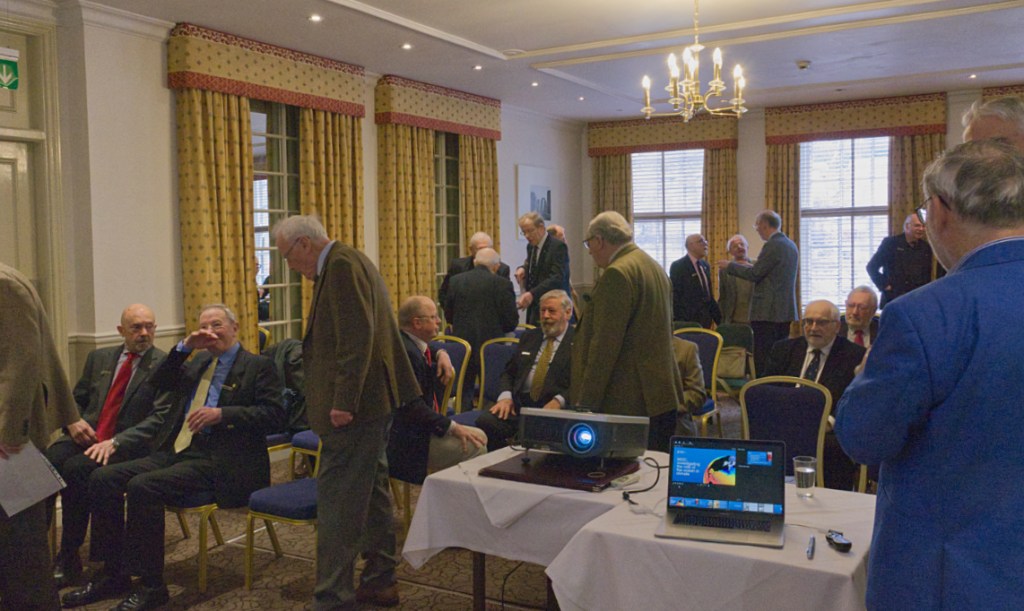
The Probus Club of Salisbury were very pleased to welcome Prof. Meric Srokosz to the White Hart Hotel for a presentation about the National Oceanography Centre, and his work measuring and analysing the properties of the North Atlantic ocean, with respect to climate change and global warming.
Prof. Meric’s biography includes the following areas of expertise:
Satellite oceanography
Measuring salinity from space, including involvement in the SMOS mission. Radar altimeter measurements of waves. Rain’s effect on altimetry and the estimation of rain from satellite sensors. Sea state bias in radar altimeter height measurements. Use of GNRR-S to measure surface roughness.
Agulhas and Madagascar Current systems
As revealed by altimetry, SST, ocean colour and models, and in situ observations (ship-based and moorings). Particular interest in the Madagascar bloom, including the relationship between biology and mesoscale eddies.
Biological-physical interactions in the upper ocean
Studying plankton patchiness using ship-based and satellite observations, including surface to subsurface links. Assimilation of data into biological models. Near real-time assimilation of cruise data into a biological-physical model. Application of dynamical systems and synchronisation theory to plankton patchiness. Adaptive unstructured grid modelling of biological-physical interactions (with Imperial College).
Surface waves, rogue waves and wave breaking.
Theory, observations, statistics, including waves on Titan. Microseisms and what they can tell us about surface waves.
Rapid climate change (RAPID)
Science coordinator of the Rapid Climate Change programme (2001 to present)
Science coordinator Changing North Atlantic (CNA) programme (2020 to present)
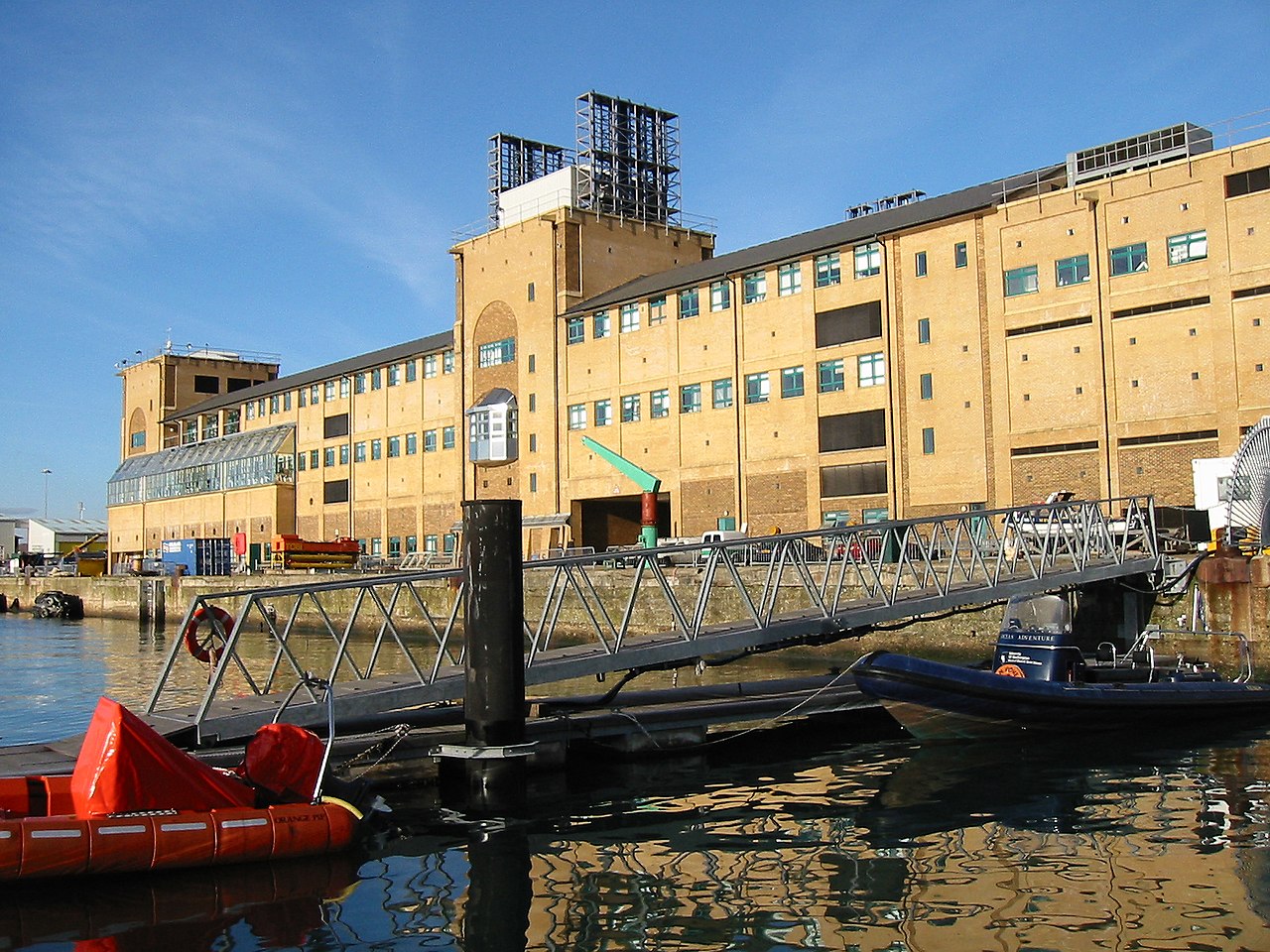
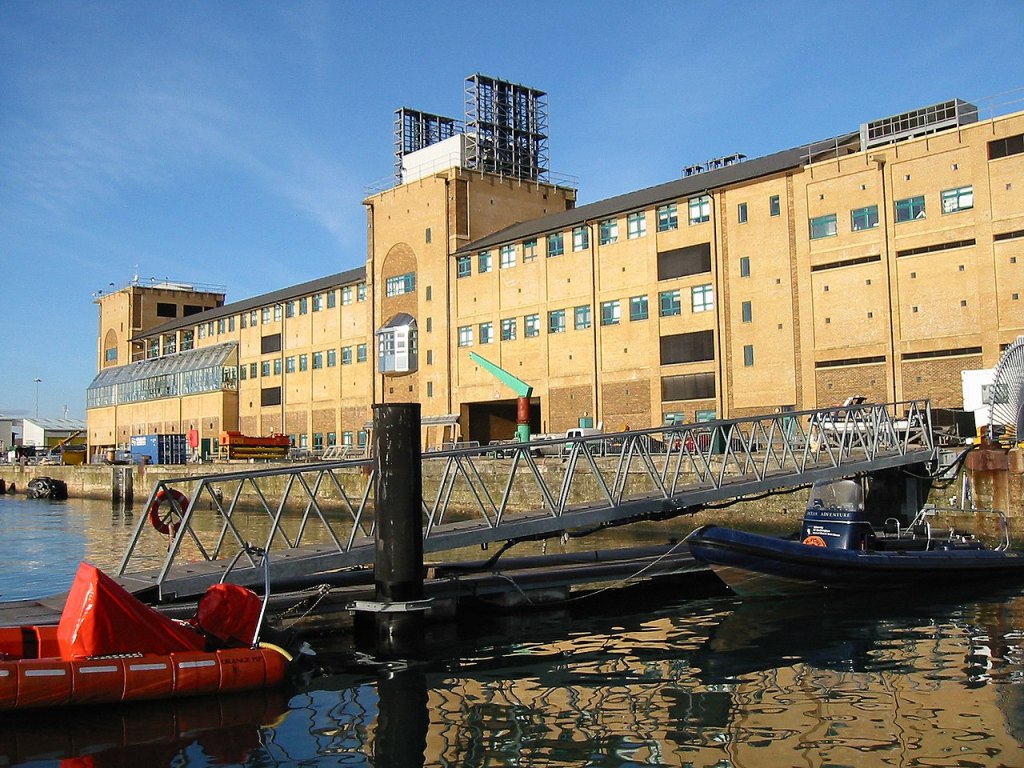
Prof. Meric began with an explanation of what the NOC is all about, and the work that it does. The NOC describes it’s purpose thus:
Our planet is a blue planet.
Most of its expanse is covered by the ocean.
This vast space is the lifeblood of our world, regulating the environment even more than the Amazon rainforest.
Yet so much of our ocean is yet to be discovered and its value is so often overlooked.
That’s why we go further to gain a deeper understanding of our ocean and coastlines.
Through ground-breaking research, collaboration and game changing innovation we will empower everyone to help them thrive.
Our fate on this planet is bound up in our ocean and there is so much exciting power to harness in its depths.
The NOC is one of the world’s top oceanographic institutions.
We provide the UK’s National Capability needed to be a top global player, to lead and participate in international cooperation’s.
We undertake world leading research in large scale oceanography and ocean measurement technology innovation; working with government and business to turn great science and technology into advice and applications. We support scientists in universities and research institutes with facilities, research infrastructure and irreplaceable data assets – enabling the UK to harness the full power and diversity of its ocean science talent.
A full overview of the work of the NOC may be found here.
Meric then went on to describe his own work, and the The Atlantic Meridional Overturning Circulation (AMOC). The AMOC plays an important role in Earth’s climate system. It transports heat from the tropical Atlantic to higher latitudes and helps to give Western Europe its mild winter climate. This system of surface and deep currents has been of interest to oceanographers and climate scientists for decades. In 2004 it became more widely known.
Two events in 2004 brought the concept of “rapid climate change” to public attention. The first was a report for the Pentagon on the implication of “abrupt climate change” for U.S. national security. The second was the film “The Day after Tomorrow” – a disaster movie that depicted the sudden advance of a second ice age as the AMOC stopped and the “great ocean conveyor” ground to a halt.
That same year, 2004, also saw the first deployment of an array of moorings across the Atlantic from Florida to Morocco . This was the start of the RAPID observations. The observing system has now completed over a decade of continuous AMOC measurements. These observations and the associated research projects have yielded surprising results and revolutionised our understanding of the AMOC.

A full description of the AMOC can be found here.
It was a fascinating lecture, full of facts and observations, and led to a number of questions from members at the conclusion.
A very sobering fact emerged when I was speaking to Prof. Meric afterwards – if ALL CO2 emissions were to stop overnight, it would take up to 200 years before the planet returned to a pre-carbon emissions state. Stopping emissions is not enough, carbon capture and inert storage need to take place to speed up the process of returning to ‘normal’.
Godfrey Bennet-Ball gave the vote of thanks, and the meeting was closed.
Fifteen members adjourned to the Rose and Crown for an informal lunch, together with lively conversation on many topics!
Our next presentation will be members ‘thumbnails’ on the 17th March.
Discover more from Probus Club of Salisbury
Subscribe to get the latest posts sent to your email.
 Probus Club of Salisbury